
·Blog
Humanity Protocol in 2026: The Evolution of Proof-of-Trust
Bui Quang Phuc, Nguyen Cong Hieu
Humanity Protocol is a pioneering blockchain network that provides digital identity infrastructure through palm biometric verification. Initially designed to combat bots and fake accounts, the project is now undergoing a major evolution into a Proof-of-Trust ecosystem. In this model, Humanity Protocol acts as a secure data bridge between traditional systems (Web2) and blockchain networks (Web3).
Its core breakthrough lies in the use of Zero-Knowledge security, which allows users to prove they are real humans and verify trusted personal attributes without storing or disclosing sensitive data to any third party. As a result, Humanity Protocol is positioning itself as a privacy-preserving compliance layer for the next generation of digital identity, Sybil resistance, and trusted onchain interaction.
Why Do Web2 Identity Checks Fail Against Bots and Deepfakes?

From the earliest days of the internet, the TCP/IP stack was built to connect servers and route information. However, it was never designed with native protocols for verifying the real human entities behind screens. Consequently, the internet evolved into an environment filled with fraud, malicious bots, fake accounts, and fragmented data silos.
Today, that problem has become far more urgent because of the rapid rise of artificial intelligence, especially large language models (LLMs) and deepfake video technology. This issue is particularly severe in markets such as Vietnam, where deepfake scams have become increasingly common. One of the most widespread fraud patterns involves attackers impersonating family members over video calls to borrow money. As AI agents become capable of mimicking behavior, voice, and facial expressions with stunning precision, traditional Web2 verification methods can no longer keep up. In practice, these legacy systems are failing at scale and contributing to trillions of dollars in damage each year.
Early-generation Web3 identity solutions such as Worldcoin, with its iris-scanning Orb hardware, emerged to address this problem. However, they also triggered strong resistance because iris scanning is viewed as excessively intrusive. Iris data is extremely rich, highly unique, and in some cases even more sensitive than fingerprints. More importantly, it may reveal medical signals, including conditions such as diabetes or neurological disorders, that users never intended to share.
Humanity Protocol enters the market as an architectural evolution. Instead of relying on highly invasive biometrics, it introduces a Proof-of-Trust (PoT) system based on palm biometrics, which is less privacy-invasive by design. Furthermore, it combines this approach with Zero-Knowledge Proofs (ZKPs) to create a default compliance layer that can securely connect trusted offchain data sources, from TradFi to Web2 platforms, directly to Web3 smart contracts.
Importantly, the Humanity Protocol is not stopping at the conceptual layer. The project has already demonstrated real-world potential through public integrations and partnerships across multiple industries. In finance, it announced a collaboration with Mastercard Open Finance, enabling users to verify financial attributes through zero-knowledge proofs without exposing raw sensitive data. This helps enterprises streamline verification workflows, reduce fraud, and minimize the need for centralized personal data storage. In education, Humanity Protocol partnered with Open Campus to support academic credential verification and digital identity issuance through verifiable credentials. In health-tech, its collaboration with Prenetics highlights the possibility of converting validated biological data into privacy-preserving identity proofs.
Humanity Protocol’s Core Architecture
At its core, Humanity Protocol is not a monolithic blockchain ledger. Instead, it is a distributed, multi-layered system that combines hardware-based biometric verification, an L2 Rollup network, and advanced Zero-Knowledge cryptography.
Layer-2 Architecture and Data Flow: Sequencer and DAC
Humanity Protocol’s foundational infrastructure is built as a Layer-2 blockchain powered by zkEVM technology and developed on top of the Polygon Chain Development Kit (CDK). Operationally, the network uses a dedicated Sequencer to collect user transactions, such as identity creation requests or credential presentations. The Sequencer groups these transactions into blocks and batches, then computes hash values representing the unique state of each batch. However, instead of submitting everything directly to Ethereum, it first sends the batch data and associated hashes to a Decentralized Attestation Committee (DAC). The DAC nodes independently validate these transaction batches. Therefore, they act as a critical checkpoint against centralized gatekeeping before the final ZK proof generation process takes place. This design improves coordination and trust minimization while preserving the efficiency advantages of L2 scaling.Dual-Layer Biometric Capture
Rather than storing raw user data, Humanity Protocol relies on on-device processing in a two-phase biometric workflow. Depending on the security requirements of a given application, one or both phases can be used. Phase 1: Mobile RGB Camera This phase uses a standard mobile optical camera to capture surface-level palm features such as fingerprints and palm lines. As a result, the onboarding process becomes fast and accessible for a wide user base. Phase 2: Infrared Hardware DePIN This phase requires specialized hardware devices that emit infrared light to read subdermal vein patterns. This greatly improves anti-spoofing performance and makes it significantly harder for attackers to bypass the system using 3D masks, printed artifacts, or deepfake techniques. From a cryptographic perspective, the original biometric images never leave the user’s device. Instead, they are immediately transformed through a one-way cryptographic hash into a non-identifiable cryptographic representation. That representation is then registered onchain as a Human ID, while the original image data is permanently deleted.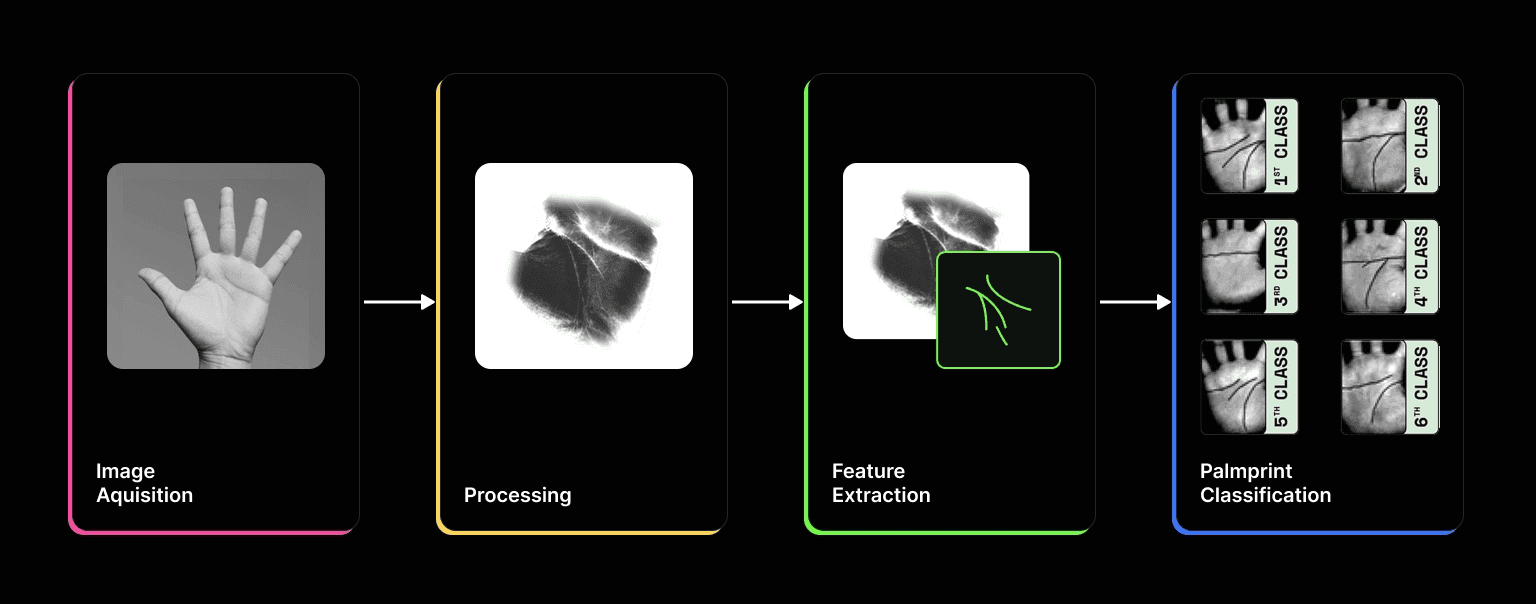
zkTLS Technical Stack: Reclaim Protocol Integration
The most revolutionary part of Humanity Protocol’s 2026 mainnet upgrade is its zkTLS (Zero-Knowledge Transport Layer Security) architecture, which is built on the core technology of Reclaim Protocol.TLS Handshake Capture
This mechanism enables privacy-preserving proof extraction from Web2 into Web3. When a browser connects to a trusted server, such as a bank or a university portal, a TLS handshake takes place. During that process, the browser verifies the server’s certificate and both sides negotiate a unique session key used to encrypt the exchanged data. The “capture” technique records cryptographic evidence showing that a specific piece of data - for example, a “Graduated” status - was genuinely sent from a server with a valid certificate and protected under the correct session key. When combined with Zero-Knowledge Proofs, this lets users prove identity-related claims onchain without revealing passwords or sensitive raw data.Proof Generation Inside a ZK Circuit
Instead of storing plaintext results, the protocol executes the full handshake flow inside a Zero-Knowledge circuit. This circuit then produces a mathematical proof confirming two critical conditions:- The TLS handshake was valid.
- The returned data genuinely originated from the specified domain.
Selective Disclosure
Zero-Knowledge algorithms enable the system to extract only the exact data point needed. For example, a user could prove that their account balance is above $10,000 without revealing their real name, address, session cookies, or password. To optimize performance, the zkTLS stack uses a proxy-based protocol model. In this design, TLS traffic is routed through a trusted proxy node that attests to the integrity of the data. Consequently, proof generation becomes substantially faster and less computationally expensive than fully client-side alternatives.Node Network: zkProofers and Identity Validators
The network’s verification and security model depends on two primary participant groups.Identity Validators
These are institutions such as universities or financial organizations that issue Verifiable Credentials (VCs). To participate, they must stake $H tokens into a smart contract. This creates clear economic accountability and discourages fraudulent credential issuance through a real skin-in-the-game mechanism.zkProofer Nodes
These nodes function as the network’s computational backbone. Each node must hold a valid Node License. When a DApp requests verification, zkProofers execute mathematical verification algorithms against the Zero-Knowledge proofs submitted by users, whether in the form of VCs or Verifiable Presentations (VPs).
Crucially, zkProofers never gain access to unencrypted metadata. Therefore, the model preserves user privacy at the verification layer itself. In addition, network economics are structured to reward this work: 25% of actual verification-fee revenue generated by DApps is allocated directly to zkProofer nodes to offset their compute costs.
Structural Insights and Hidden Trade-Offs of Humanity Protocol
A closer look at Humanity Protocol’s technical design reveals several important architectural trade-offs and systemic risks.State Disassociation Risk in SSI Design
The core security advantage of Humanity Protocol’s Self-Sovereign Identity (SSI) model is that only proofs and hashes are stored onchain, while raw data remains offchain. However, this also creates a state disassociation risk. For example, if an issuer such as a university revokes a credential in the real world after detecting fraud, the corresponding ZKP onchain may not be invalidated immediately. That delay creates an opportunity for malicious actors to exploit the gap through state arbitrage attacks, continuing to use no-longer-valid credentials in DeFi or other onchain environments.Performance vs. Decentralization in zkTLS
The use of a proxy-based design in Reclaim-powered zkTLS creates a clear structural trade-off. On one hand, routing traffic through an intermediary proxy node dramatically improves proof-generation speed and reduces client-side computational overhead. On the other hand, it introduces an additional temporary trust assumption into the system. Therefore, maintaining network integrity requires strict slashing mechanisms for proxy nodes. Without strong enforcement, the proxy layer could become a weak point in the trust model.DePIN Expansion Pressure
The transition from Phase 1 onboarding through RGB camera capture to Phase 2 verification through specialized infrared scanning hardware formally pushes Humanity Protocol into the DePIN category. Although infrared vein scanning is materially safer than iris scanning from a privacy perspective, because vascular patterns are not externally visible—it also creates a massive logistical barrier. At that stage, the success of the network no longer depends only on software execution or protocol design. Instead, it also depends on physical supply-chain management, hardware manufacturing, device distribution, and operational scalability across global markets.What Humanity Protocol Means for Builders, Users, Investors, and Auditors
For Builders and Enterprises
Humanity Protocol’s API stack allows developers to integrate Sybil resistance into DAOs and consumer applications without relying on traditional KYC systems. More importantly, it directly solves painful, real-world business problems that are highly visible in Web2 markets. For example, in Vietnam, marketing campaigns involving zero-cost vouchers, flash deals, e-wallet promotions, e-commerce incentives, and F&B loyalty programs are often destroyed by “SIM farms” and fake account operators who mass-claim rewards. By integrating palm-vein verification, businesses can ensure that each voucher reaches one real human being, without ever needing to know that person’s exact legal identity. Consequently, brands can protect campaign ROI instead of burning budget on bots.For the Ecosystem and End Users
Humanity Protocol’s Zero-Knowledge framework directly addresses a major psychological barrier in online identity workflows: the fear of exposing national ID cards, facial images, and highly sensitive personal data. This is especially relevant in markets where identity leaks are frequently exploited for predatory lending, account takeovers, or fraud. Instead of submitting full identity documents to dating apps, exchanges, or recruitment platforms, users could simply present a ZKP-based credential proving statements such as: “I am a real human and I am over 18.” As a result, platforms gain stronger trust signals while eliminating the burden of storing raw sensitive data that could later be stolen by hackers. Looking ahead, messaging and communication platforms could also integrate Human ID to provide a verified badge confirming that an incoming call originates from a real, authenticated person. That would create a powerful practical defense against deepfake fraud.For Investors and Traders
The price dynamics of $H depend directly on actual protocol usage. Large token unlock events - for example, the unlock of. 105.4 million $H. tokens on 25/03/2026, may create short-term supply pressure. However, from a longer-term perspective, $H functions as a. yield-bearing network asset because node operators can earn a share of protocol activity. Specifically, 25% of verification fees generated by DApps is distributed to network participants operating zkProofer nodes.For Auditors
The security review framework for Humanity Protocol must extend far beyond standard Solidity logic audits. Traditional smart contract review alone is not sufficient. Auditors must also assess the mathematical correctness of Zero-Knowledge circuits, along with the full proxy configuration flow inside the zkTLS stack. Specifically, they need to examine whether spoofing, coercion, or TLS-handshake manipulation could occur at the proof-generation layer.What Should the Market Watch Next?
To validate the long-term investment thesis and manage structural risk, the following indicators should be monitored closely:Revenue Composition
Track how dependent zkProofer nodes are on inflationary rewards, such as the 18% Identity Verification Rewards pool, versus real organic cash flow from verification fees generated by live DApp integrations.DePIN Rollout Progress
Monitor the production cost, deployment speed, and geographic distribution of dedicated infrared scanning hardware, especially in emerging markets. This will help determine whether Humanity Protocol can scale its network effect while preserving long-term anti-spoofing strength.Liquidity Response to Token Unlocks
Observe order-book behavior on exchanges such as Kanga and KuCoin around major cliff unlock events, particularly in late March 2026. This is a key signal for assessing market-maker absorption capacity and short-term volatility risk.Governance Proposals
Stay updated on Humanity Improvement Proposals (HIPs) related to verification-fee splits, proxy-node slashing mechanisms in the zkTLS architecture, and staking requirements for Identity Validators.zkTLS Performance and Error Rates
Evaluate whether the proxy-based Reclaim architecture can remain reliable under massive parallel verification loads from large institutional partners such as Mastercard or global aviation systems.Closing Notes
The rise of Humanity Protocol and its transition from a binary Proof-of-Personhood model to a broader Proof-of-Trust architecture fundamentally reshapes how digital identity can be defined in Web3. By combining privacy-first biometric design through on-device palm-vein processing, an L2 Rollup architecture with Sequencer/DAC coordination, and advanced zkTLS cryptography, Humanity Protocol offers a far more nuanced solution to the Sybil attack problem, without repeating the biometric privacy controversies that surrounded first-generation projects such as Worldcoin and World ID. Admittedly, the protocol still faces significant operational pressure, especially around DePIN hardware deployment and physical logistics. Nevertheless, its ability to solve urgent, real-life problems in local markets - from deepfake fraud prevention and promotion abuse mitigation to privacy-preserving identity verification - shows that its potential extends far beyond that of a typical DApp. Step by step, Humanity Protocol is positioning itself to become the default trust layer for the future digital economy.Author: Bui Quang Phuc, Nguyen Cong Hieu - Security Researchers of A-Star Group Compiled by Dieu Anh