
·Blog
DeFAI Sensor: A Big Step to Redefine Crypto Data
Le Ngoc Binh
Every day, $264.5 billion changes hands in the crypto derivatives market. Yet over 80% of retail traders are still entering positions late because the tools they rely on weren't built for this speed of data updating. DeFAI Sensor changes that.
When Trillion-Dollar Volume Overwhelms Human Intuition
2025 marks a historic inflection point for the crypto market. According to CoinGlass, the derivatives market has now reached $85.7 trillion annually. On any given day, traders move an average of $264.5 billion through these markets — a figure that would have seemed impossible just three years ago. Perpetual contracts drive the majority of that activity. Specifically, they now account for 78% of total derivatives volume, making them five to ten times larger than the spot market. Meanwhile, capital is migrating decisively toward decentralized platforms, pushing DEX Perps volume up 8x in a remarkably short period.
The market keeps expanding. Yet the retail trader is being left behind.
Internal data from Centic.io, drawn from 400,000+ trading wallets across Hyperliquid, Jupiter, and GMX, exposes a pattern that is difficult to ignore. More than 80% of retail traders consistently enter positions late relative to Smart Money flows. Manual information processing forces traders to spend between 180 and 600 seconds reading news, verifying charts, and placing orders. In high-liquidity zones, that 3-minute lag becomes costly. It is the root cause of slippage — silently eroding 10% to 30% of potential profit on high-leverage positions.

Why Do Existing Tools Keep Failing Retail Traders?
The problem is not a shortage of data. In fact, the opposite is true — traders are drowning in it. What the market lacks is contextual intelligence delivered at the right speed. Traditional analytics dashboards surface raw numbers. They do not reason. They do not cross-reference on-chain signals with social sentiment. More critically, they do not act. As a result, retail traders are perpetually one step behind. They receive alerts without context, signals without strategy, and data without direction. Consequently, even well-informed traders make reactive decisions rather than proactive ones. What the market demands, therefore, is infrastructure that can process Big Data and generate autonomous reasoning in real time. That is precisely the problem DeFAI Sensor was engineered to solve.The Solution: Big Data Infrastructure Meets a Creator-Powered Hub Ecosystem
The real power of DeFAI Sensor does not rest on AI alone. Instead, it is built on top of Centic's battle-tested data infrastructure — a foundation that actively stores over 106 million multi-dimensional data points. These span social media activity, transaction logs, and raw on-chain events sourced continuously from the market. The architecture is designed to scale. Direct Data Pipelines connect 5+ blockchains — including Solana, Arbitrum, BSC, and Base — and the system actively ingests more than 1,000 events per second. Furthermore, the distributed infrastructure processes these streams in parallel, eliminating the bottlenecks that cripple conventional analytics tools.
Data Hubs: Where AI Becomes a Community Asset
Rather than delivering a monolithic, impersonal AI engine, DeFAI Sensor introduces Hubs — specialized community spaces where Content Creators and domain experts actively build audiences, develop proprietary trading strategies, and monetize their expertise. Each Hub functions as a living ecosystem, not a static dashboard. Within this structure, DeFAI Sensor's AI tools are embedded directly into each Hub as a high-performance co-pilot. This integration creates a clear, dual-sided benefit:- For Content Creators: AI actively automates hundreds of parallel data research tasks. As a result, Creators produce high-depth market reports and actionable signals that would otherwise demand hours of manual compilation.
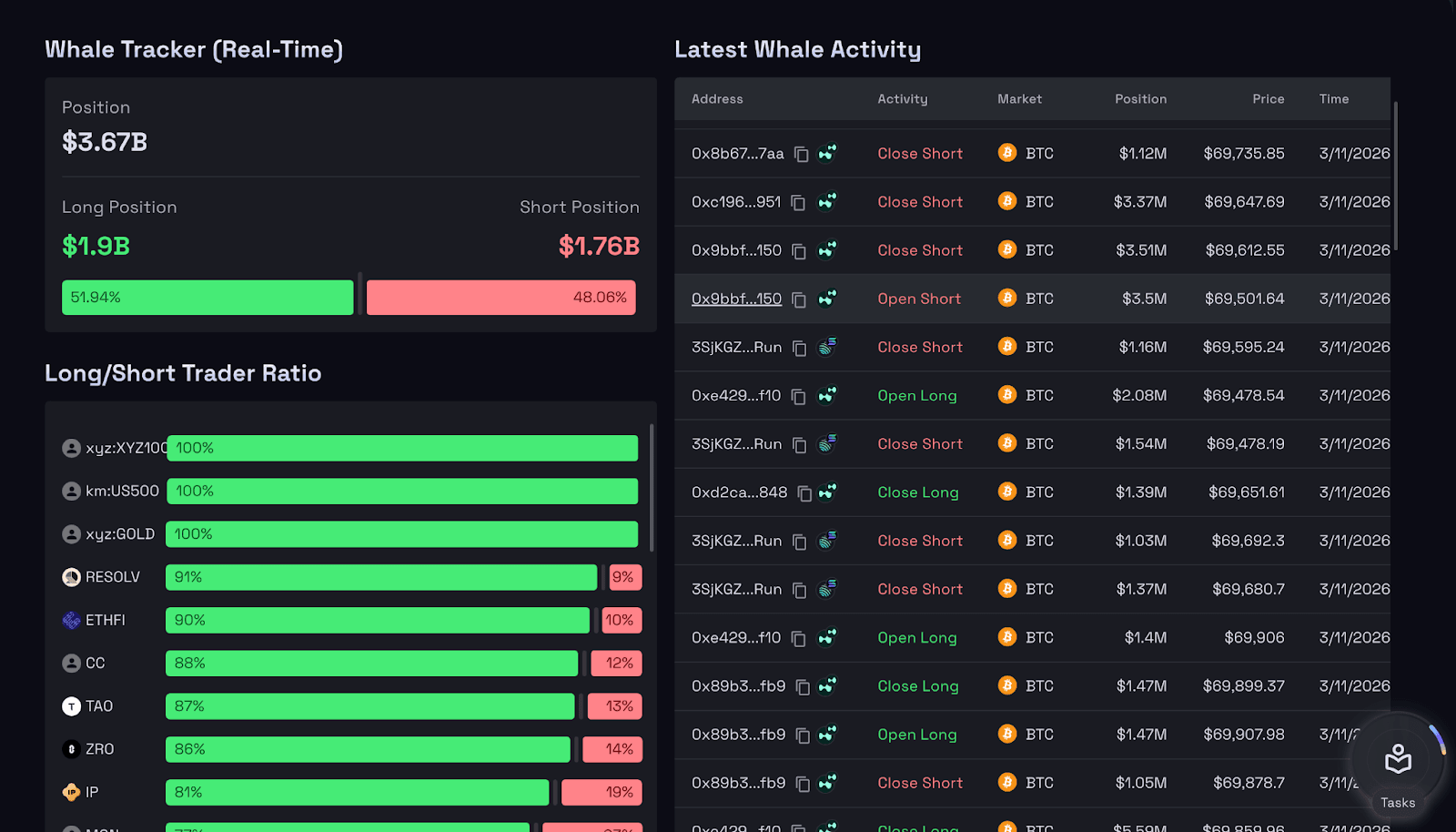
- For Viewers: The AI-powered pipeline compresses information lag from tens of minutes of manual verification down to under 5 seconds. Users receive pre-filtered, high-signal intelligence — not raw noise.
How DeFAI Sensor Thinks: The Sense → Think → Act Pipeline
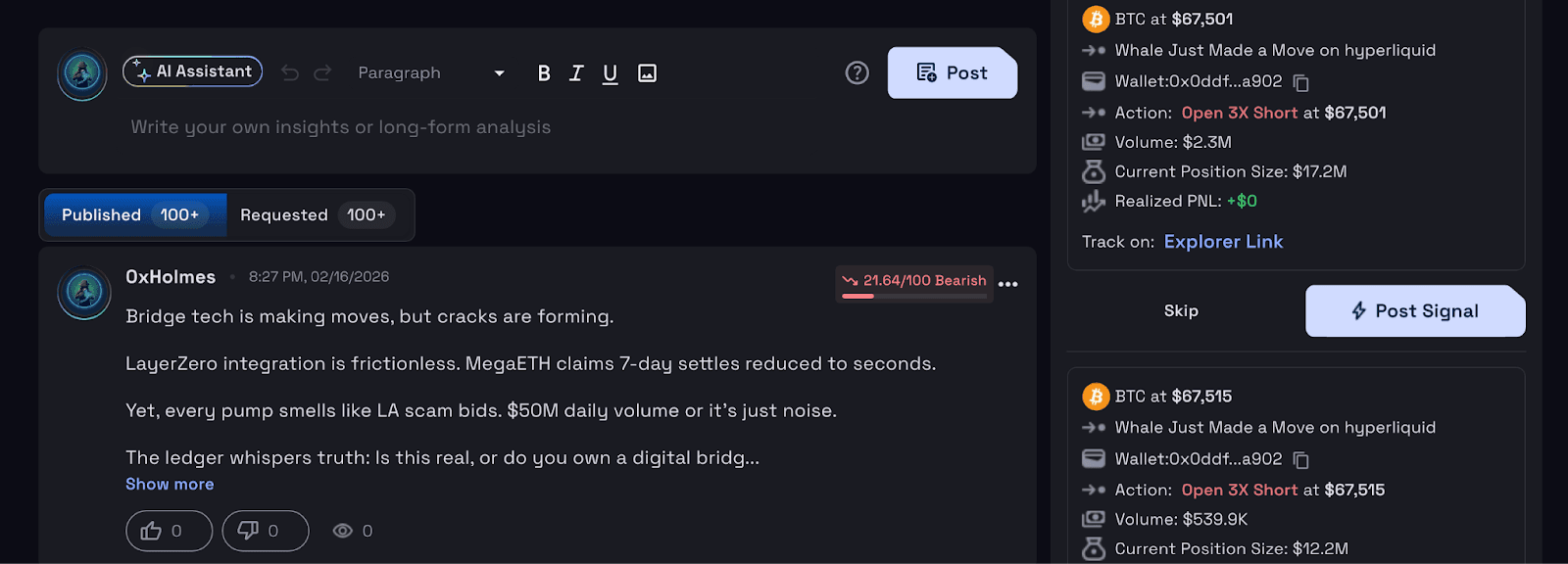
To understand how the architecture performs under real market conditions, consider the following scenario. The system detects a $2.3 million Open Short on $BTC placed on Hyperliquid. A legacy tool delivers one thing: a decontextualized number. DeFAI Sensor, in contrast, activates its full reasoning engine immediately. The AI cross-references that signal against tens of thousands of real-time social posts and simultaneously evaluates the prevailing negative funding rate environment. Within seconds, it surfaces a structured conclusion: This is not market noise. This is deliberate positioning — designed to trigger a broad-based short squeeze.
The system does not stop at analysis. It automatically compiles the full context, attaches the strategic implication, and pushes the complete insight directly to the Hub community. Members receive actionable intelligence before the broader market has even registered the move.
Who Does DeFAI Sensor Serve?
The platform actively addresses two distinct, high-value problem sets within the Web3 ecosystem:Experts, KOLs & Strategic Partners
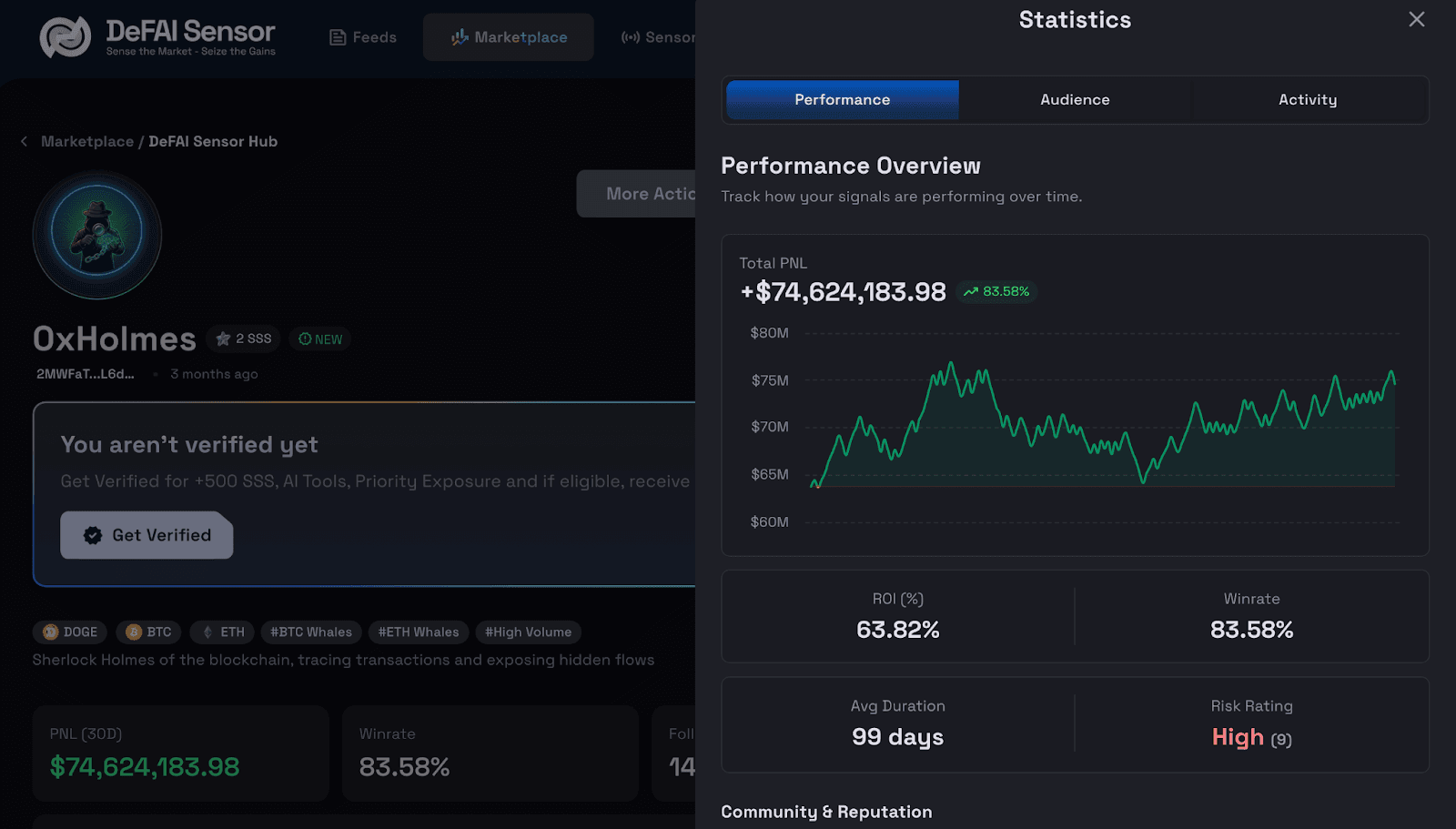
DeFAI Sensor gives professionals the infrastructure to deploy, backtest, and validate trading strategies with full verifiability. Creators define their Hub persona, monetize their intellectual capital through HubFee, and build a credible personal brand grounded in on-chain performance records — not self-reported results. In other words, the platform lets expertise speak for itself.New Users & Viewers
For those entering the space, DeFAI Sensor acts as a structured, low-noise gateway to learning. Instead of drowning in Twitter noise or reacting to FOMO-driven narratives, users actively access deep-dive analytical reports from verified experts. The platform compresses research time significantly and enables cleaner, more confident decision-making at every stage.On-Chain Proof: Trust Built on Math, Not Marketing Claims
As Web3 builders, DeFAI Sensor's team operates by a single core principle: "Don't trust. Verify." Expecting users to commit capital based on AI marketing language alone is unreasonable — and the team knows it.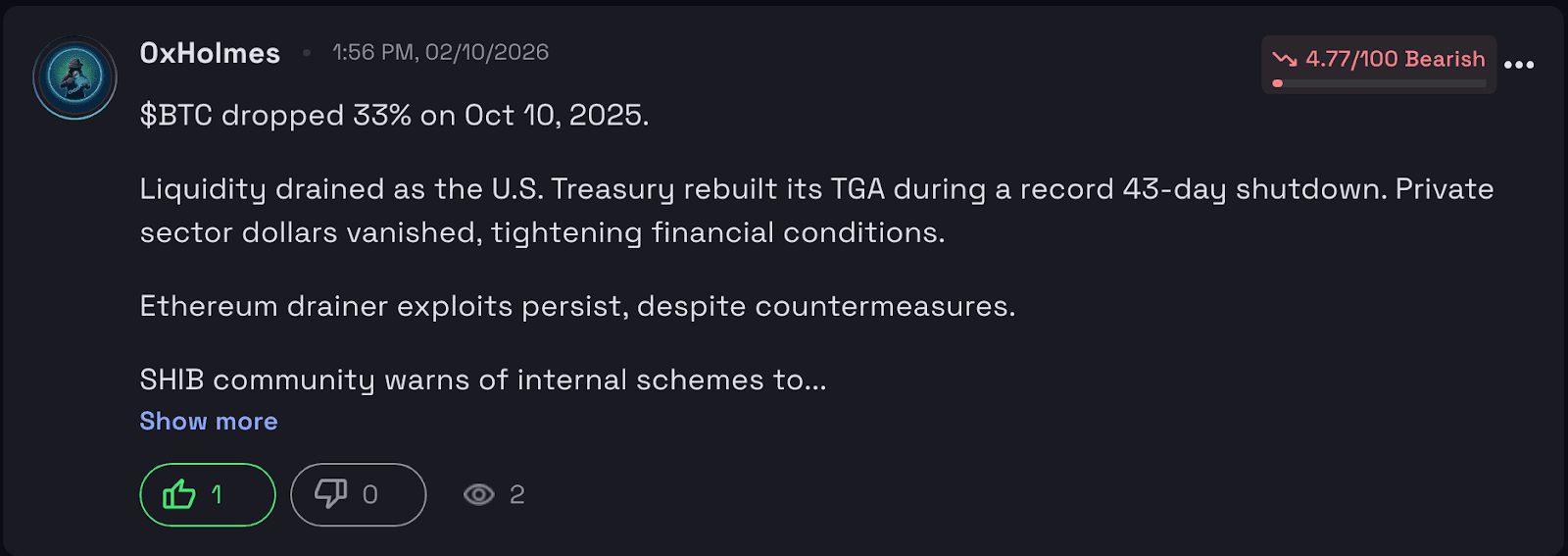
That is why DeFAI Sensor integrates a native On-Chain Proof layer directly into the platform. Every signal and market call that a Hub publishes gets hashed and immutably recorded on-chain. Once the data is live, no one can alter or delete it — including the development team itself. The blockchain enforces that guarantee unconditionally, regardless of whether the market confirms or contradicts the prediction.
Building on this transparent foundation, the system automatically calculates real-time performance metrics and verified win rates for every AI Agent and Creator. The scoring is continuous, objective, and manipulation-proof. Consequently, users operate in an environment where they pay only for signals that mathematics and cryptographic proof have already validated — not ones that merely claim to deliver value.
In a space built on trustlessness, that is the only standard worth building to.
Author: Le Ngoc Binh, member of Data Analytics team in A-Star Group Compiled by Dieu Anh