·Blog
Blockchain 2025 Recap: 6 lessons from the Giants
Ngọc Trung, Đình Nam, Quang Thịnh, Đức Dương
Discover how blockchain scaled in 2025 from Ethereum's Pectra upgrade and Solana's Firedancer to BlackRock's $2.9B BUIDL fund and Sui's Walrus storage. A full 2025 recap for builders and investors.
Lesson 1: Why 2025 Was Blockchain's Defining Year?
Obviously, 2025 was not just another volatile price cycle. It marked the genuine maturity of the on-chain economy. After years of chasing an "Ethereum Killer," the market finally shifted focus and networks began optimizing existing infrastructure instead of replacing it. Ethereum celebrated its 10th anniversary. Simultaneously, Solana and the Move ecosystem (Sui and Aptos) achieved breakthrough performance metrics. Consequently, they became ready to absorb massive capital from institutional players. Spot ETF approvals and BlackRock's tokenized asset fund (BUIDL) validated blockchain as serious financial infrastructure. This convergence of infrastructure maturity and institutional capital inflow defined 2025.Lessons 2: "All about users" - The Giants said
EVM & Ethereum: The UX Revolution and L2 Scaling Power
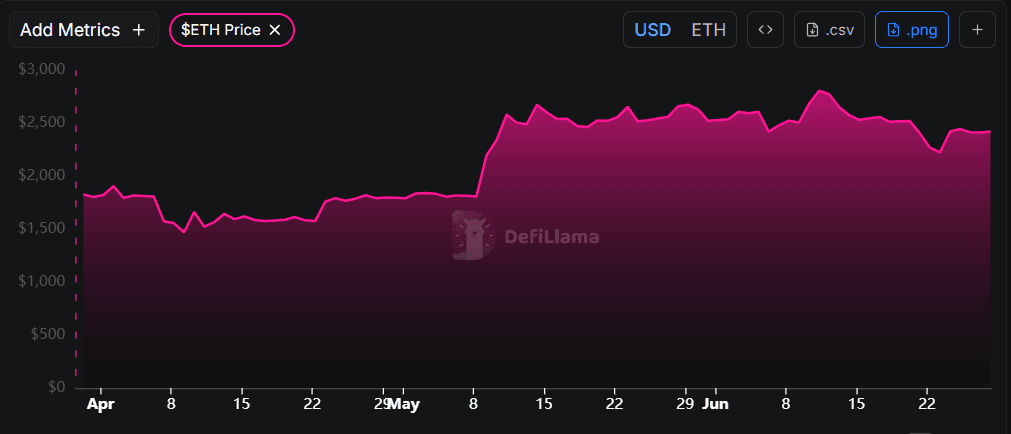
Ethereum executed an ambitious double upgrade roadmap in 2025. Both upgrades addressed two core challenges: user experience (UX) and scalability.Pectra Upgrade (May 2025):
- Enabled Account Abstraction by allowing Externally Owned Accounts (EOAs) to function as Smart Contracts.
- Wallets can now automatically pay gas fees or batch transactions seamlessly.
- Staking limits increased from 32 ETH to 2,048 ETH, reducing validator fragmentation.
Fusaka Upgrade (December 2025):
- Introduced PeerDAS architecture, expanding data processing capacity by 8x.
- Block gas limit raised to 60M, creating massive data space for L2s.
- Integrated secp256r1 precompile, enabling FaceID/TouchID for on-chain transaction signing.
TradFi Capital: The Giant's Push
Institutional capital entered blockchain at an unprecedented scale. Specifically:- BlackRock BUIDL: Launched in March 2024, the fund surged from ~$500M (end of 2024) to $2.9 billion by end of 2025, a ~580% year-over-year growth. BlackRock, the world's largest asset manager, confirmed blockchain as its preferred settlement infrastructure.
- Ondo Finance (OUSG): The leading RWA protocol grew from ~$150M (early 2024) to $446M in Q2 2025, a ~200% increase.
The Rise of Base: Why Did It Explode?
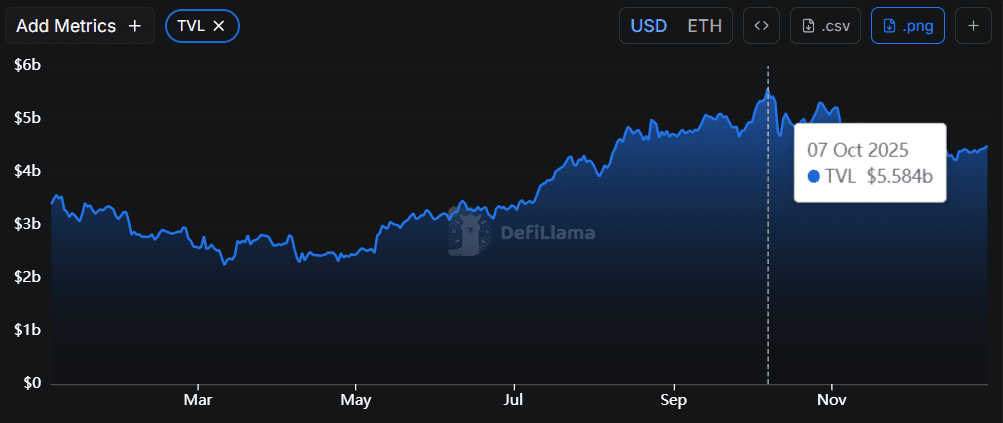
Base achieved something remarkable. TVL grew from $0.7B (March 2024) to a peak of $5.58B in Q4 2025 — an 8x increase. Furthermore, Base captured 46% of the Layer 2 market, officially overthrowing Arbitrum One. Three strategic pillars drove this growth:- Coinbase Gateway: Base leveraged Coinbase's massive user base. On-chain onboarding became as simple as a few clicks.
- Smart Wallet & FaceID: Base was an early adopter of Pectra/Fusaka. Users can now sign transactions with FaceID, eliminating the seed phrase barrier from traditional Web3.
- SocialFi & Mainstream User Hub: With tens to hundreds of millions of transactions per month, Base became home to social dApps like Farcaster v3, where seamless UX is the top priority.
Solana: Firedancer's Engine and the Real-Time Finance Ambition
Solana's engineering team didn't just patch existing problems. They replaced the entire network engine through three core upgrades:Account-Local Fee Market (Local Fees):
- Solana eliminated the global gas fee mechanism.
- Congestion now only occurs locally at hotspots (e.g., during an NFT drop).
- Other dApps maintain ultra-low, stable fees. Consequently, one project's spam can no longer paralyze the entire network.
Firedancer (New C++ Client - Official Launch December 2025):
- Previously, Solana's actual TPS hovered around 2,000–3,000.
- Firedancer achieved 90,000 TPS on mainnet - a 30-45x improvement.
- Latency was reduced 16x, dropping to ~25 milliseconds.
- Client diversity now provides a critical safety net. If the original client fails, Firedancer maintains network operations - making the system nearly invulnerable to single-client failures.
Alpenglow Consensus (Ultra-Fast Transaction Finality):
- Alpenglow moves validator voting off-chain, streamlining the process.
- Transaction finality time was cut from 12.8 seconds to just 100-150 miliseconds.
- This directly supports high-frequency trading (HFT) financial systems.
Market Share & Capital Flow:
- Solana's market cap share grew from 1.7% (2024) to 3.3% (2025), signaling strong capital rotation into this ecosystem.
- Capital flow matured from speculation toward Solana Spot ETF positioning in Q4.
- Firedancer's launch on December 12, 2025 generated a 300% spike in technical documentation traffic.
Move Ecosystem: Sui & Aptos Prove the Power of Purpose-Built Languages
While EVM optimizes legacy wallets, the Move ecosystem demonstrated something different. A programming language designed specifically for digital assets can deliver superior security and flexibility.SUI: Building Web3's Massive Storage Layer
- The "Complete Stack" Strategy: Sui's ambition extends beyond transaction processing. Walrus - a decentralized 4PB storage solution launched in March 2025 - solves dApps' biggest challenge: big data storage. Walrus turns data into native objects, allowing smart contracts to read and write directly to decentralized storage. No intermediaries like Arweave or IPFS are required.
- Mysticeti v2 - Optimizing Every Millisecond: This upgrade minimizes message-passing steps between validator nodes. At ~390ms transaction finality, Sui is now the fastest-responding L1 on the market. In contrast to other chains, this makes it ideal for SocialFi and GameFi applications requiring instant feedback.
- Team Liquid Case Study: In January 2026, leading esports organization Team Liquid migrated 250TB of archive data to Walrus. This real-world example proves Sui can replace traditional cloud storage for Web3 enterprises.
APTOS: Financial Precision and Smart Data Management
- Move 2.0 & FA Standard: Aptos introduced the new Fungible Asset (FA) Standard, replacing the old token model. FA Standard enables deeper modularization of Real World Assets (RWA), such as bonds or real estate. For example, a tokenized property can automatically distribute yield to thousands of investors with minimal gas, thanks to Move 2's modular structure.
- Shelby Protocol - The Validator's Lifesaver: High-speed chains suffer from State Bloat , accumulated junk data that burdens node servers. Shelby classifies data into "hot" (frequently accessed) and "cold" (archival). By enabling ultra-fast access to hot data, Shelby allows validator nodes to maintain high performance without costly RAM/SSD investments.
- Decibel - The Next-Generation On-Chain Exchange: Leveraging Aptos' parallel processing technology, Decibel can match tens of thousands of orders simultaneously with zero latency, directly competing with centralized exchanges in execution smoothness.
Lesson 3: The Gap is Smaller
Convergence of UX and Infrastructure:
The technology of 2025 is no longer "tech for tech's sake." Upgrades like Pectra and Firedancer share one ultimate goal: making blockchain invisible to end users.Modular vs. Monolithic - The Reconciliation:
Ethereum continues its Modular path (layered architecture). In contrast, Solana and Sui demonstrate the power of the Monolithic model when maximally optimized. Both architectures achieved distinct successes. The market has room for both approaches.Real-World Utility at a Professional Level:
Organizations like Team Liquid and asset managers like BlackRock choosing L1/L2 chains for asset storage and operations signals that blockchain's reliability and availability have reached enterprise-grade trust.Lesson 4: 2026 is The Era of Predictability and Performance
Rather than dry spec sheets, the 2026 roadmap focuses on realizing institutional-grade standards.Ethereum: The Glamsterdam & Hegota Era
H1/2026 - Glamsterdam:
- Deploys Enshrined PBS (ePBS) via EIP-7732, reducing validator centralization risk.
- Targets a gas limit of 100M+ to maximize Rollup support.
H2/2026 - Hegota:
- Solves the storage problem with Verkle Trees, reducing node storage requirements by 90%.
- Moves toward true Statelessness, nodes no longer need to store the full chain history.
Solana: Internet Capital Market
- Firedancer Official: The second validator client goes fully live, targeting 1 million TPS.
- SIMD-268: Increases CPI (cross-program invocation) nesting limits. Complex dApps can combine dozens of protocols simultaneously without bottlenecks.
Sui: The S2 Ecosystem
- Sui Stack (S2): Transitions into an AI-native platform, supporting autonomous machine-to-machine tasks directly on-chain.
- Gasless Stablecoin: Stablecoin transfers (e.g., USDsui) are expected to be completely free of gas fees for end users.
Aptos: Performance Economics
- Hard Cap of 2.1 Billion APT: Transitions to a deflationary model to attract institutional capital flows.
- Raptr Consensus & Decibel: Launches a new consensus protocol optimized for high-performance on-chain exchanges.
Lesson 5: What Should Builders and Investors Do Now?
For Builders & Teams:
- Leverage Smart Accounts: Stop building traditional wallets. Maximize Pectra's capabilities on EVM. Build signless and gasless application experiences.
- Design for Low Latency: With millisecond infrastructure now standard, builders should focus on areas previously impossible on-chain, high-frequency derivatives trading and real-time AI agent interactions.
For Investors:
- RWA Signal Is Real: This is no longer speculation. Pay attention to infrastructure projects with strong tokenization support , specifically Aptos FA Standard and Ethereum's secp256r1 precompile.
- The Rise of Parallel EVM Chains: Monad and Berachain are names to watch closely. They are attempting to bring Solana-level performance to Ethereum's liquidity-rich ecosystem.
Regulatory & Funding Direction:
- Capital is concentrating around Chain Abstraction solutions where users can use assets on Chain A to interact with Chain B, without complex bridging.
Lesson 6: Keep your watchlist concise
- Monad & Berachain Mainnet (Q1/Q2 2026): Will Parallel EVM truly be the "holy grail" combining both worlds?
- Solana Spot ETF Wave: Following positive signals from late 2025, an ETF approval would be a massive liquidity catalyst.
- Walrus (Sui) Adoption: Watch whether Web2 organizations - film studios, gaming companies - migrate large-scale data to Walrus.
- Ethereum "Surge" Phase: Post-Fusaka proposals aim to reduce L2 data storage costs to near zero.